

Welcome to AI‑SMARTHealth 2026
Digital‑health technologies are transforming healthcare through the integration of wireless sensor networks, body‑area networks, mobile devices and edge‑cloud infrastructures. These systems enable continuous monitoring, real‑time analytics and personalised care outside of traditional clinical settings. Yet the reliance on distributed, resource‑constrained and data‑intensive wireless environments raises significant challenges in security, privacy, reliability and performance. AI‑driven models must operate under communication constraints, adapt to dynamic network conditions and remain robust against adversarial threats, while also meeting strict latency, energy‑efficiency and Quality of Service requirements.
The AI‑SMARTHealth workshop brings together researchers and practitioners from wireless/mobile systems, artificial intelligence, cybersecurity and healthcare technologies to explore novel approaches for designing, modelling and deploying secure, intelligent digital‑health systems. Building on the success of the AI‑EFD series, this edition emphasises network‑aware intelligence and performance‑driven design, secure and scalable architectures for healthcare applications, rigorous modelling and simulation, and experimental evaluation. Our goal is to foster cross‑disciplinary collaboration and advance the next generation of trustworthy and resilient wireless healthcare systems.
Extended versions of selected workshop papers will be considered for publication in a Special Issue of Springer’s Computing journal.
Topics of Interest
The workshop invites research papers, case studies and position papers on topics including, but not limited to:
-
Wireless and Mobile Healthcare Systems
- Wireless sensor networks, body area networks, and IoT in healthcare
- Communication protocols for mobile health systems
- Resource allocation, routing, and scheduling in healthcare networks
- QoS/QoE provisioning for healthcare applications
- Energy-efficient and reliable communication in medical systems
-
AI for Wireless and Mobile Healthcare Systems
- AI-driven health monitoring and decision support over wireless systems
- Machine learning and deep learning for biomedical signals and images
- Reinforcement learning for adaptive and personalized healthcare
- Network-aware AI and communication-efficient learning
-
Cybersecurity and Privacy
- Threat detection and anomaly detection in healthcare networks
- Security of IoT medical devices and wearable systems
- Adversarial machine learning in healthcare
- Privacy-preserving techniques (federated learning, differential privacy, homomorphic encryption)
- Secure data sharing and access control
-
Distributed and Edge Intelligence
- Edge computing and federated learning in healthcare systems
- On-device intelligence for mobile and wearable devices
- Real-time analytics under resource constraints
- Distributed AI for large-scale healthcare deployments
-
Modeling, Simulation, and Performance Analysis
- Modeling and simulation of wireless healthcare systems
- Performance evaluation (latency, reliability, scalability, energy efficiency)
- Analytical and stochastic modeling of healthcare networks
- Simulation frameworks for large-scale IoT healthcare systems
- Trade-offs between communication, computation, and learning
-
Sensing and Data Integration
- Multi-modal data fusion (physiological, behavioral, environmental)
- Ambient intelligence and context-aware healthcare
- Integration of heterogeneous sensing platforms
-
Trustworthy and Explainable AI
- Explainability and interpretability in healthcare AI
- Bias, fairness, and ethical considerations
- Human-in-the-loop decision systems
-
System Evaluation and Deployment
- Benchmarking and datasets for wireless healthcare systems
- Real-world deployment and experimental validation
- Robustness, reliability, and user acceptance
-
Emerging Directions
- Digital twins for healthcare systems
- Extended reality (XR) in healthcare environments
- AI-driven telehealth and remote monitoring
Important Dates
- Paper Submission Deadline:
July 17, 2026->July 31, 2026 - Notification of Acceptance:
August 4, 2026-> August 20, 2026 - Camera‑Ready Deadline:
August 14, 2026-> August 31, 2026 - Workshop Date: October 26, 2026 (during MSWiM 2026)
Workshop Organizers

Dr. Moustafa Fayad
Dr. Moustafa Fayad received his Ph.D. in Artificial Intelligence and Decision‑Making from Université de Paris Cité in 2021. He is currently a junior professor at the Université Marie & Louis Pasteur’s SINERGIES laboratory, where he leads research on AI‑enabled digital health systems. His work addresses practical and theoretical challenges in healthcare AI, including the ANR‑funded project ANR‑23‑CPJ1‑0010‑01 (2023–2027). Dr. Fayad co‑chaired the AI‑EFD 2025 workshop and contributes to the STARS EU alliance’s Healthy Ageing group.
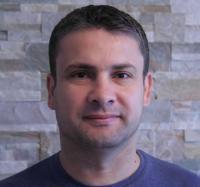
Dr‑HDR. Ahmed Mostefaoui
Dr‑HDR. Ahmed Mostefaoui has been an associate professor at Université Marie & Louis Pasteur since 2000. He earned his M.Sc. and Ph.D. degrees in computer science from École Normale Supérieure de Lyon in 1996 and 2000. His research spans distributed algorithms for wireless ad‑hoc and sensor networks, multimedia systems and distributed architectures. With decades of experience in networking and mobile computing, he regularly organises scientific events and contributes to the research community.

Dr‑HDR. Mohammed Amine Merzoug
Dr‑HDR. Mohammed Amine Merzoug is an associate professor in the Computer Science Department at the University of Batna 2, Algeria. Previously he held positions at the University of Lyon, Université Marie & Louis Pasteur, the FEMTO‑ST Institute and the University of Batna 1. He obtained his HDR in 2023 and his Ph.D. in 2019 from the University of Bejaia (jointly with the University of Franche‑Comté). His research interests include distributed systems, cybersecurity and AI‑driven optimisation of system performance. Dr. Merzoug co‑organised the inaugural AI‑EFD workshop.
Technical Program Committee
Our technical program committee comprises experts from academia and industry who will ensure a high‑quality review process.
- Dr. Réda Yahiaoui, University of Marie & Louis Pasteur, France
- Dr. Nassima Fatma‑Zohra Nacer, ECE‑Paris Engineering School, France
- Dr. Jad Bassil, University of Marie & Louis Pasteur, France
- Pr. Gabriele Gianini, University of Milan, Italy
- Pr. Ann Svensson, University of West, Sweden
- Dr. Kabalan Chaccour, University of Antonine, Lebanon
- Pr. Kamal Ghoumid, University of Mohammed First, Morocco
- Dr. Elmar Yusifli, Atisol solutions for professionals, France
The program committee will be finalized soon.